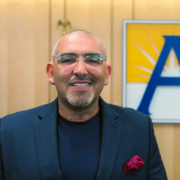
DR. FRANCISCO DURÁN/APS Superintendent (virtual Teams interview on July 31, 2025;
transcription aided by Ms. Amanda Villatoro Reyes)
[LIGHTLY EDITED FOR CLARITY/READABILITY]
Chris Park 0:03
Thank you for meeting with us. My name is Chris. I’m a rising junior who will be at
Arlington Tech this year. I was originally in the APS system at Arlington Science Focus until
about second grade. And then after that I moved to a private school in Alexandria.
Durán, Dr. Francisco 0:26
We’re glad to have you back. Good.
Chris Park 0:28
For my Eagle Scout project, I’m working with the Arlington Historical Society to create the
foundation for an exhibit on the history of education in Arlington. I’m interviewing
important figures and educators such as yourself–like audio accounts to get sound bites
and quotes in the transcription to put in the exhibit. So starting off, what brought you to
Arlington Public Schools, and what really drew you to this community?
Durán, Dr. Francisco 1:18
Great question. Definitely what brought me to Arlington was the real deep commitment to
public schools here in Arlington and a belief by all the community that the power of public
education has to change lives for our students. There is really, really a strong community
engagement, not just for our public schools, but overall in Arlington.
Wanting to make this the best place to live, and part of that is, of course, having a good
public school system for all of our students. There’s also a longstanding reputation for
academic excellence that Arlington has had. But more than anything, it was the people, the
students, the families and the staff and the community partners who stood out to me.
When we think about many, many communities that you could look at for public school
systems, this is really one that you see–the county government, the county board, the
county manager being supportive of our schools. And an interesting thing about 80% of
Arlington residents don’t have any children in public schools. Only about 20% of the
population does. And even though 80% don’t have any students in the school system,
they’re very, very supportive of wanting to make sure that we have a strong public school
system. And so that to me was very much a draw.
Chris Park 2:30
Yeah, absolutely. Basically, the other people that I interviewed, the strong sense of community within Arlington has always been a focus point. I feel that’s very admirable.
How would you describe your vision for APS when you first became Superintendent [in
your] first term?
Durán, Dr. Francisco 2:45
From the very beginning, I saw that our dedication and our focus needed to be that every
student, regardless of what strengths they may have, what needs they may have, has
access to opportunities. And then also not just access, because, you know, we always talk
about giving students access, like make sure there are programs for them to have. It’s also
about the support that’s needed to thrive in those various opportunities. The kind of
commitment that I have really aligns closely with my values as an educator. I’ve finished 31
years as an educator and we really think through that every student deserves the very,
very best, whether that be again, more challenge or more support, that we really think
about what it is that we’re doing as the adults to make this a place for students and not a
place for adults. Sometimes systems and companies and organizations that work with
youth are always thinking about what’s best for the adults in the system. For me, my vision
is what do our students need, valuing every student’s voice, and then all of us working
together to make sure that one, we have a safe environment, a supportive environment,
but a very challenging environment for our students.
Chris Park 3:58
Yeah, absolutely. I feel like that distinction between not only giving students the means to
sort of excel, but helping them thrive in that environment, it’s great. In what ways do you
see APS building on its historical strengths?
Durán, Dr. Francisco 4:06
Clearly, APS has a long tradition of very strong academic excellence in many different
ways. Reports on APS are in the top, top, top. But I think that when we think about how do
we build upon that and how do we make sure that we continue that to make sure that that
commitment is around the whole child working with our community partners to build that
foundation every single day, whether it’s expanding access, as I talked about already, or
whether it’s making students have the resources that they need or the support that they
need. But I think what’s important is that we’re constantly looking at the data that we see
in terms of all varieties of students. And no matter their background or their circumstance,
are we still supporting them? Because we can only be as strong academically and the
strength that we have over time can only last further if we’re constantly seeing who the
students that we currently serve today, not necessarily who we served in the past,
because it does change. And in order to do that, that means we have to really look at the
backgrounds, the circumstances, the needs and importantly, the strengths of our students
that we have. And again, that might mean new resources, that might mean different
resources, that might mean different support, more support, but constantly making sure
each and every year that we are looking into that.
Chris Park 5:32
Speaking of looking into the background of each student and sort of helping them develop
in that way, what steps has APS taken in recent years to make education more equitable
for these students?
Durán, Dr. Francisco 5:44
One thing that since my very first day and even part of my career has always been around
equity and thinking about that as the heart of our work. Because really at the end of the
day, people talk about the word equity in so many different ways and it’s used politically in
ways that I think are not appropriate. But for me at the end of the day, equity is just
meeting every student by name, strength and need. And so one of the first steps we did
was to adopt a division-wide policy on equity that really helped them create a
comprehensive plan and action plan to guide what that meant.
So what did that mean? That meant that we, through that policy and through our plan, we
would look at where there are gaps that exist. And where there were gaps that were
existing, whether they were gaps around test scores or whether they were gaps around
attendance or they were gaps around behavior, that we would be taking intentional steps
to close them and that we would be putting in the right resources and supports. And
sometimes that might mean budget concerns. And so we’ve done a lot of investment in
literacy. We changed our whole approach to literacy at the elementary level, first and then
secondary level. We looked at how our absenteeism was showing up, and we put in a lot
more supports there. We saw some challenges. For students in the area of substance
abuse, we brought in more substance abuse counselors at the high school level where
that’s needed. So my point is really looking at where those gaps, where those needs are
and matching them with different supports and programs. We also created teams at every
school of staff to provide ongoing training and support around being culturally responsive,
about being inclusive.
And we also begin to use our data differently to address disparities. And since I’ve been
here, we’ve revamped what’s called our school action plan and our principals have to look
at their data and develop an action plan that they also work with their PTA on and they
post publicly, and that’s part of their work to think about those gaps at their specific
school, because each school has different needs. In Arlington, we have different
neighborhoods with different needs. And so part of the work of making it more equitable
for all is to really look at that data, look at the gaps and put a plan in place. We’ve also, as
I’ve already shared, we’ve done a lot of work in chronic absenteeism.
Another thing I’m proud of for equitable education since I’ve been here, we increased
access to advanced courses at the middle school level. We brought them back when I
came. There were not middle school advanced courses available for students. And so for
students who needed more challenge at the middle school level, they didn’t have that.
We’ve also been thinking about our students with disabilities, and we’ve been putting
efforts in place to make sure they’re more included in classrooms and not separated out.
Because what we find for many students with disabilities, when they are just put in a
separate room with only other students with disabilities, they’re not getting that equitable
education that they need and that they deserve.
And finally, I think really when we think about equitable education, it’s also about students
feeling seen and valued and empowered to succeed. And so we’ve had to do a lot of work
with regards to our immigrant community. Recently, we have to do a lot of work for the
LGBTQ+ community. We’ve had to do a lot of work with regards to students who
essentially felt that they weren’t safe in our community. But we wanted to make sure at
school, they did feel safe and they were part of our community.
Chris Park 9:02
You briefly touched on the opportunity gaps and closing those achievement opportunity
gaps. Can you touch a little more on how you measure success in closing those?
Durán, Dr. Francisco 9:12
Sure. So one thing that we have to do as we look at the data for any opportunity or
achievement gaps is we have to measure it in multiple ways, obviously starting with data.
So we disaggregate the data, we look at student outcomes, we look at it by race, we look
at it by language, we look at it by ability or other factors, and see where gaps exist. So it’s
very important to disaggregate it to see where progress is happening, where it’s not
happening. We also don’t just look though at data for, you know, the SOL tests that we
take once a year–that’s one piece that I think limits us, if we’re thinking about just gaps in
test scores.
We’re off to look at other things like graduation rate, like participation in advanced
courses. How many students are getting to participate in advanced courses and who are
those students that are not getting to participate? I shared earlier about attendance. Look
at that data, disaggregate that as well. Are there certain groups that because if you’re not coming to school, you’re not going to be successful. So that’s an obvious gap when you’re
not in school.
And then also discipline trends. So are there groups of students that are being sent out of
class more than others, being suspended more than others? Because again, if you’re not in
class, you’re not going to be able to close those academic gaps.
You know, when we think about closing the gaps, it’s not just the numbers alone, though,
that tell the story. We also have to listen to our students. We have to listen to our families.
We have to think about do they feel supported? Do they feel they have access? We can
put a whole bunch of plans in place looking at the data. But if we don’t actually have our
students and our families and our teachers feel that that’s matching their needs, then we
also have to do what we call the qualitative data side of this. And success means when we
think about closing the achievement gap or opportunity gap, it’s really where we see fewer
disparities and more students from every background around that are really thriving
academically and socially and is a constant, constant look each and every year, but even
throughout the year because this takes time and it takes effort to ensure that we are being
flexible also during the year and not just waiting for that one test result that comes from
the state.
Chris Park 11:22
I know your first term was right in the middle of the pandemic. What were the biggest
challenges in APS recovering from COVID-19, especially since your second term sort of
like recovering from that?
Durán, Dr. Francisco 11:39
The biggest challenge, of course, is addressing the unfinished learning in reading and math,
where we saw many students through the, you know, virtual learning is not for everyone,
and particularly some of the students who need the most support. It’s not for them. Virtual
learning has its place and it’s beneficial in some ways.
But something we’ve been very focused on is how do we find ways to really target those
groups of students [to] support, to catch them up. While we’ve made some progress, you
can see in math and reading, we still have some more work in that area. But another thing
that as a big challenge from COVID has been absenteeism and a different change in terms
of how students and even families are focused on getting students in school. And so we
put a lot of new supports in place to try and support that. And the third challenge I think has been really about increased mental health and
behavioral needs of students coming back into a very structured environment after such a
disruptive period. For some students in the upper grades, that was difficult because it was
broken in terms of their consistency. But for our students in our younger grades, many of
them had never been in a school before if you’re in kindergarten or first grade or going
through the pandemic, and so they needed to have structure again and you have teaching
of what it means to be in school. And so we thought about that and we’ve done some
research and some consultants helped us think through social emotional learning
programs, some more school-based mental health supports.
And then of course, I can’t forget that through the pandemic, teachers and the staff that are
supporting students, they navigated a lot dealing with their personal challenges in that and
then also professionally. And so we’ve had to support our staff who’ve been working very
hard through this time, thinking about the care that they need and how do we continue to
support them moving forward.
Chris Park 13:23
I know you touched on developing mental health programs to support students. How is
APS preparing students for a world that’s increasingly more digital, diverse and complex
with all these new innovations happening not only technically but in society?
Durán, Dr. Francisco 13:55
To do that, I think we have to make sure students have the skills, the mindset and the
support in this changing world that’s coming. And as you know very well, I’m sure it
changes every day. And so we don’t even know what tomorrow’s going to be. But what
we’ve done to start because we have to do, we have to work with what we have and what
we do though.
First, I think I’m very proud in APS that we’ve invested in technology, digital literacy so that
students have access to devices. We’re teaching them how to use digital tools responsibly
and creatively. Because what we want is even though there is AI coming on and there are
all these devices that you can use, we still want people to be critical thinkers and problem
solvers, and we need to learn the ethical side of how to use technology. Knowing that this
world will change in so many ways and technology will evolve, we don’t know what those
technical, technological skills may be needed later on. We know some right now. But what
we can think about is how do we prepare ourself to be, again, problem solvers and ethical
users of that?
And I think we also understand that students are growing up in a very diverse world. So
we also have to think about how we support everyone being respected, every voice being
valued. How do we have culturally responsive teaching practices? How do we offer
different spaces and places for students to feel they’re a part of the classroom, whether it’s
through the curriculum that we’re teaching, making sure we have all the histories of
everyone in our buildings. And I think as the world becomes more complex, we have to
help again build those skills to navigate it with competence. So we work very hard in our
lessons on collaboration, on resilience, how to be adaptable, how to be flexible, because
those are going to be the skills we need to do as the world quickly, quickly changes around
us. You’ve got to be resilient through that. You’ve got to be flexible and adapt to it, and
you’ve got to collaborate with others or even with technology, right? That might be
something we have to collaborate with.
As a partner, we haven’t thought about it that way, but it’s likely with AI, something that
we could see as a tool for us, not the driver for us, but a tool for us. And so I think that we
have to not just prepare students for academic success, but we need to think about all
those other skills outside of reading, writing, math, etc., that are more perhaps necessary
now because you don’t need to learn facts only. You can look up a lot of facts. You can use
ChatGPT and all kinds of things to get information. When I went to school, I was all about
facts and memorizing and getting things in your head so that you knew these things.
But now you need to also think about how do you navigate information that’s already out
there? How do you know what is true? What is not true? How do you problem solve with
the information you’ve been given? How do you apply the information you’ve been given
or can easily access to a real-world experience or an actual problem that you’re trying to
solve?
Chris Park 16:50
You touched on resiliency, collaboration and the sense of community that APS has. How
do not only you but APS as a whole engage with students, families, principals, teachers
and staff to understand not only the needs of the students, or the needs of adults, but the
needs of the whole community?
Durán, Dr. Francisco 17:14
A couple of things I think we have. We do a lot of listening sessions. I meet regularly with
principals and school staff, and district teams meet quarterly with students. I do, but we
have a student advisory board that meets monthly, visiting schools, observing classrooms,
talking with everyone there, checking in with staff who are doing the day-to-day.
They work, engage with families and community members in a lot of different ways
through surveys. We have a once-a-year survey. We have advisory groups where parents
and community members join through the School Board, and they actually work on
specific issues and topics that are of importance to them and those advisory groups which
are totally made up of parents and the community. They then submit [to] us a report of
things that we could do better or some ideas. And so I think that it’s an opportunity for us
to really find different ways to engage with them.
Another thing we do, that I do, is meeting with our multilingual community. We have a lot
of families who don’t speak English, and so we have to find other ways for them to engage.
They may not respond to a survey or come to the meeting. So I go to them quarterly,
different meetings that I have in the community to really listen because every perspective
matters, and I believe that the decisions that we make really need to be thinking about
everyone’s perspective in mind.
And so those are a bunch of different ways that either the School Board or myself or
principals or teachers try and listen and really bring those voices into our discussions.
Chris Park 18:44
What are your top priorities for the next, give or take, five years of APS?
Durán, Dr. Francisco 18:53
Well, we’ve collectively worked together last year to reimagine our strategic plan. And we
had thousands and thousands and thousands of responses from parents and community
members to help us develop our five-year plan. So I say our strategic plan is our road
map. It’s that shared vision for student success that our community gave us a lot of
feedback on. We made a lot of tweaking to it. We had multiple sessions in our community
where people showed up and then we had a lot of, like I said, thousands and thousands of
feedback on it.
And so the next five years is centered around those five strategic goals. The first one is
student success. The next one is about well-being, the overall mental health and support
of students. A third one is about our engaged workforce, which is about our employees
and supporting them. The fourth one is operational excellence to make sure that we are
providing efficiency and environmental supports and being sound in that work in our
budget, use of our resources and dollars. And then the last one is strong partnerships with
our families.
And so these aren’t just words on a page though; really we’ve taken all the work through
the strategic plan for the next five years, and we’ve set goals and metrics. You can look it
up and see on our website. It’s really detailed where we can show what are the data
points we want to meet each year so that by 2030 we have accomplished what we set
out to do in these five years. And the strategic plan is how we stay focused. It’s how we
measure our progress our schools have to take, take the strategic plan and build it into
their school action plan. Our departments here take it and to build it to a department
action plan. And this then reflects, the work that we’re going to do each and every year.
And then our School Board uses it to turn in terms of what we’ll budget and how we fund
the resources that we’re going to be provided to our schools.
Chris Park 20:44
How do you hope people will describe APS 10 years from now?
Durán, Dr. Francisco 20:51
I hope, and I’m going to claim that people will say that APS is really a place where every
student, no matter their background, was given opportunities to thrive and did thrive. I
hope that people will say that it’s a place where equity is not just a value we talk about,
but something we live out in every classroom, from every school, every decision. I hope
that people will say that APS is a school division that leads with integrity, that is innovative,
and that has truly challenged and prepared students for the complex world that they’ll be
living in. And most of all, I hope that they’ll describe APS as a community that came
together, families, educators and partners, not just a school system with teachers, but over
here and parents over here, and that we’ve come together to build something better for
our next generation. Where students feel seen, where they feel valued, empowered, and
really strengthened to do the work that they need to create their future.
Chris Park 21:53
One thing that I’ve noticed about APS and well, I haven’t been in the system for a while,
but I have a lot of friends who are. It’s just that despite all the commitments to [the]
development of technology, like innovation, that type of stuff, the the main focus still is on
building, supporting that community, which I feel like it’s not only, as you said, not only a
core value, but it’s really the focus.
Before we wrap up here, is there anything else you’d like to add?
Durán, Dr. Francisco 22:29
No, I just want to commend you for doing this. Thank you for doing this. It’s an exciting
project I think to document the work and look forward to your success at Arlington Tech
and hope that you will find many opportunities for yourself. It’s a wonderful place to be
with the ability to even graduate with advanced associate’s degree or college credits. So
that’s a very unique thing. You know, we have the largest, they tell me in Virginia, number
of high schoolers who graduate from Arlington Tech with an associate’s degree and
college credits than any other high school in the whole Commonwealth. So you’re in a
special place there. So thank you for doing it. And I didn’t get to talk to your mother, but
thank you for your support and your son in doing this work.
Chris Park 23:28
Thank you, Dr. Durán.

