
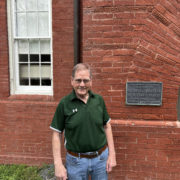
DR. ROBERT SMITH/Former APS Superintendent (in-person interview on July 15, 2025 at
Arlington Historical Museum)
[LIGHTLY EDITED FOR CLARITY/READABILITY]
CP: Could you describe your journey to becoming the superintendent of APS in 1997?
RS: Sure. If you’re talking about a journey, I can take you on a long, long trip. I started teaching,
in the mid-1960s. it was 1965 and I taught social studies in high school in in Middletown,
Maryland in the Frederick County School District. And I worked in the Frederick County system
for I think it was 16 years. And when I left there, I was the director of teacher instruction for the
county. And I left along with my superintendent, who took another superintendency in a
suburban district outside Houston called the Spring Independent School District. And so I spent
another 16 years there as the assistant superintendent for curriculum instruction. And then my
superintendent retired. I started looking around the country and ended up back in the
Washington area. I grew up in Silver Spring, Maryland. Arlington was available and it was one of
a number of places where I interviewed, and I liked the board. They seemed to be good people.
They had gone through transformation. And so it was a strong district. I didn’t come in saving a
failing district. I came in to make better a very good district. And so I did that, and I spent 12
years as superintendent here. I retired at age 65. Then I worked for 10 years as a professor at
George Mason University, preparing people who wanted to become school administrators. And
so I was teaching masters-level classes and also doctoral seminars and also carried a fairly full
slate of folks who were writing their dissertations. I was their advisor…really enjoyed that. But
after 10 years, I told you I was 65 when I left the school. So at 75, I retired again. And so I’ve
been retired for seven years. Also part of that history is also a history of my education: as I said,
I grew up in Silver Spring. I graduated from Blair High School, then I went to a very large
university in the hills of West Virginia called Davis and Elkins College. You’ve heard of it?
CP: No, I didn’t think so.
RS: And majored in history and political science there. And minored in English. During the time
that I was there, I participated in a program, I think it was the first semester of my senior year,
which was a national program hosted by an American University called the Washington
Semester Program. I think it still exists. When I was superintendent in Arlington, it still existed. It
brought in mostly history and political science majors in their junior, senior year for a
semester-long experience at AU. We had a seminar group with a professor who was our guide,
and we attended seminars with public officials that were all confidential. We were sworn to
confidentiality, and the program had such a good reputation that the people actually understood
that. We interviewed people–legislative aides to senators, Congress people, one Supreme
Court justice…we never never got to a President. And so that was part of the semester, and that
was our seminar, treated like a three-credit graduate class. We also had to write a paper, which
was another three credits, and that was it was probably as demanding as, at least as my
master’s thesis. I wrote a paper based upon interviews of mostly representatives and
congressional aides, but it was all focused around the political process that resulted in a little
box on a pack of cigarettes, which says, “You can get cancer. If you smoke these things.” And so the focus of the study was the interaction of the political groups involved in helping to get that
passed and fighting against it. And I was a smoker at the time, and I remember going into
Representative Kornegay of North Carolina, where many cigarettes originated, and I would go
into his office; he had a little Camels, Camel cigarettes, little four-cigarette packages. And I’d
always get one of those and smoke one. And then I would leave there and I’d go to Michigan
Congressman John Dingell, who was the main force in the House of Representatives for getting
that little label on the cigarette package. It was really a study of that kind of political operation.
When I left Davis and Elkins College, I went to teach in Frederick. Then I started the master’s
program in the summer. That’s kind of a sad story. I was going to take my master’s degree at AU
since I had that experience there in the first semester of my senior year at Davis and Elkins. I
recognized after I started teaching in the summer, I was driving a yellow cab in Silver Spring in
D.C. And I realized that when I started teaching, I wasn’t going to be able to afford to go to AU. I
would have been able to as a cab driver. So I switched to the University of Maryland and ended
up getting my master’s degree in political science from the University of Maryland. Not so long
after getting the master’s degree, I finished my doctorate in education administration, also at the
University of Maryland in 1973 or so.
Until I went to Houston, I worked at a number of administrative jobs in Frederick, and I think I
said when I left there, I was Director of Curriculum and Staff Development, and then went as
Assistant Superintendent for the Spring District and spent another 16 years there. When my
superintendent retired, I don’t think the board wanted me. It wasn’t a surprise. It was okay. And,
so I didn’t even bother applying. I did talk to the people who were the headhunters for filling the
position. The first half of my interview with them, I gave them a tutorial on the politics of the
community, so they would have a sense of that. Then they spent the rest of the interview time
telling me about other positions where they were directing the searches. So I started looking
around the country, and I came very close to accepting a position in Michigan. But then the offer
was withdrawn. I even had signed a draft contract with the board. But a local person entered the
search late, and apparently it was a very, very divided community, and the board was divided for
three, and four who voted for the new person. So I missed that job, and then Arlington came up.
I knew Arlington a little bit, not a lot, from my time in Maryland. In fact, when my parents first
moved to the Washington D.C. area, we lived in Arlington for a couple of months, maybe, in a
house that had been vacated by a former colleague of my dad’s who was spending, along with
his family, the summer in Europe. And so we stayed in that house until my parents found a place
that they wanted to get in Silver Spring. That’s how I ended up in Maryland, staying there.
CP: Do you know around what year this was?
RS: 1950 was when we moved into this area.
CP: Thank you.
RS: That is right because I started in the Montgomery County schools–second grade. Mrs.
Anderson…this is more detail than probably you want or need.
CP: Everything’s helpful.
RS: I looked around the country. Arlington became available. I had interviewed a number of
other places. It was pretty clear to me with my first meeting with the board that this was a group
that I would get along with. It had just undergone some major change [due to] political
machinations, so it was a pretty new board…And some of them are still around. I had lunch just
recently with Libby Garvey, who was one of those original board members and became chair of
the County Board after she left the School Board. So she’s still around and active. But she just
retired from the County Board.
CP: When you were serving as Superintendent, APS was going through a period of change.
How did your leadership help shape that?
RS: That’s a good question. The board was very interested in creating a new path for the
County schools. I got them involved in developing a five-year plan. We engaged the community
in that, and we created a strategic plan based upon the work that we did with the community,
which included obviously talking with groups, but also some fairly well-developed survey
research as well. And then put together a committee with which I worked,
countywide–somewhere between 15 and 20 people. We developed a draft five-year plan; I think
the county’s still doing that. The top objective had to do with the achievement gap, particularly
for African American and Latino students. I found it startling, even having spent some time in
Texas. Those kinds of gaps are not unheard of, but the gap in Arlington was much starker. It
may have had something to do with also the divide in terms of family income–between the
Latino community and White community, the African American and White communities. That
became essentially the most important thing we were working on. It remained that way during
the entire time that I was Superintendent; the Board maintained it for at least a few years after I
left. So I think we developed a national reputation for the work that we were doing along those
lines.
I was a member of a group of superintendents from around the country called the Minority
Student Achievement. I think it still exists. It started out in Evanston, Illinois. But we were
leaders in that, and we were one of the original school districts involved. I invited, of course,
Alexandria Public Schools to join us, and so they joined about maybe seven or eight years in.
So the work around those kinds of issues, those kinds of equity issues, were paramount during
the time.
One of the things that I did when I decided to retire from the superintendency is that I was
gonna move and [not] get involved…it would have been both useless and inappropriate. But I
did decide to teach at George Mason University, and so there was no reason for me to move.
But I just made the promise to myself: I was going to be ignorant of the schools; I was not going
to interact with the schools except in social ways. And so I stuck with that. Pat Murphy
succeeded me; then he left and was replaced by the current Superintendent. Francisco Duran. I
knew Patrick. Francisco was an assistant or associate superintendent in the Fairfax County
Public Schools. But he also taught as an adjunct in the graduate program where I was working at Mason, so I got to know him there. I hear from time to time stuff that’s going on in the schools.
I hear from

