
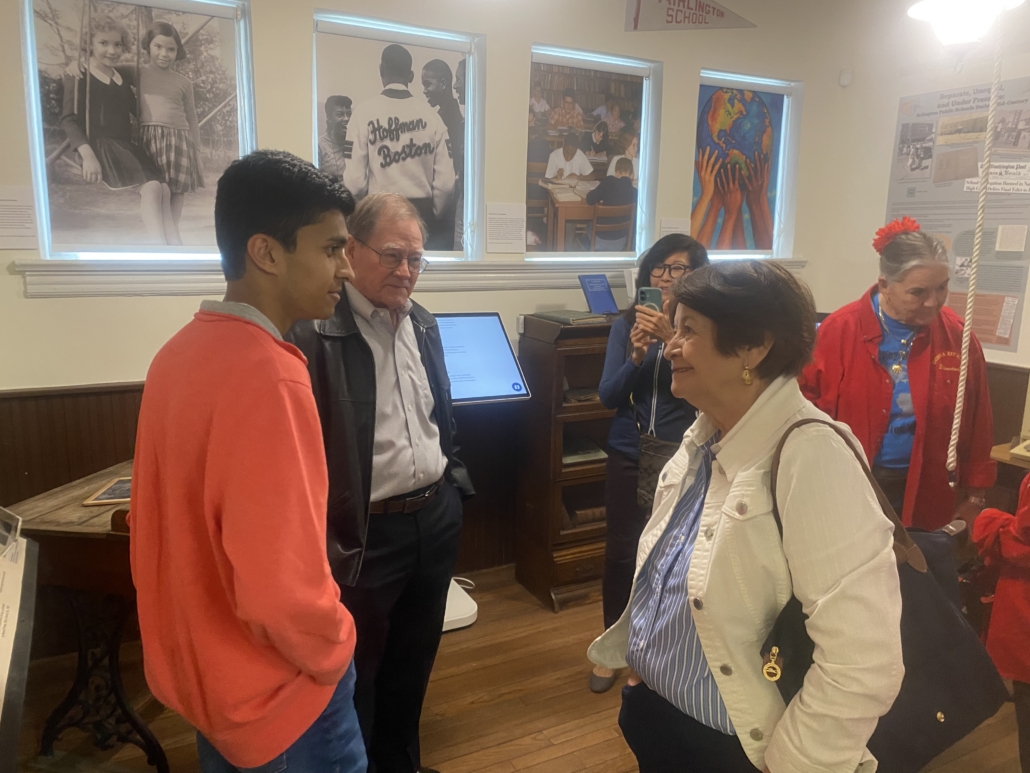
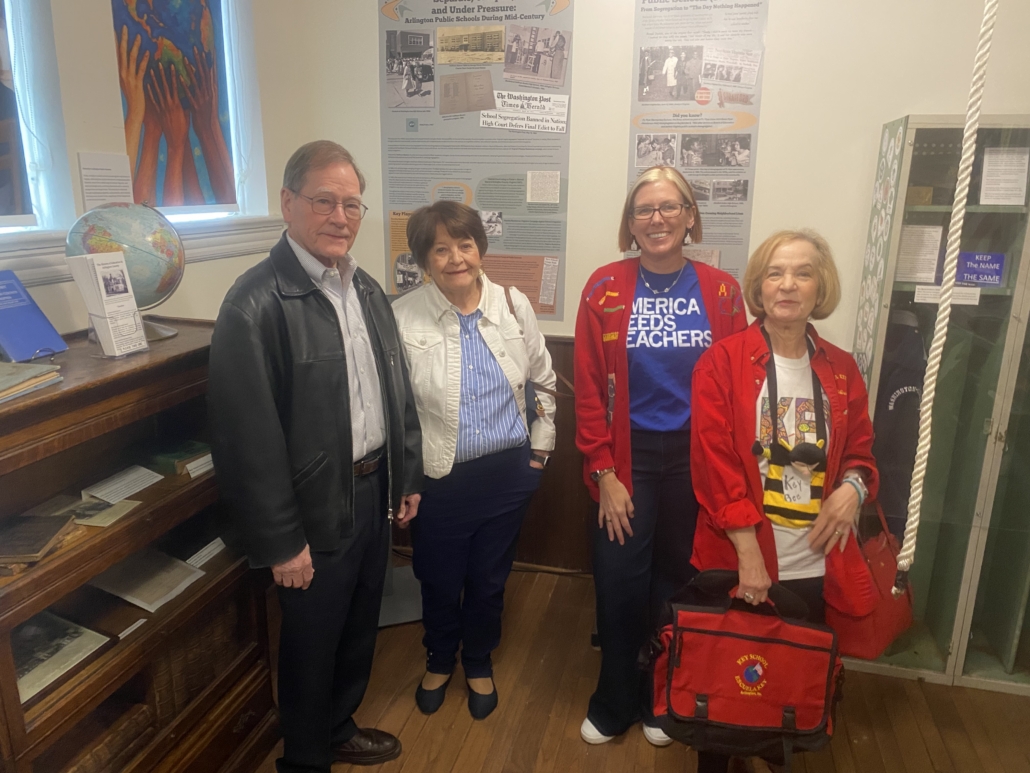
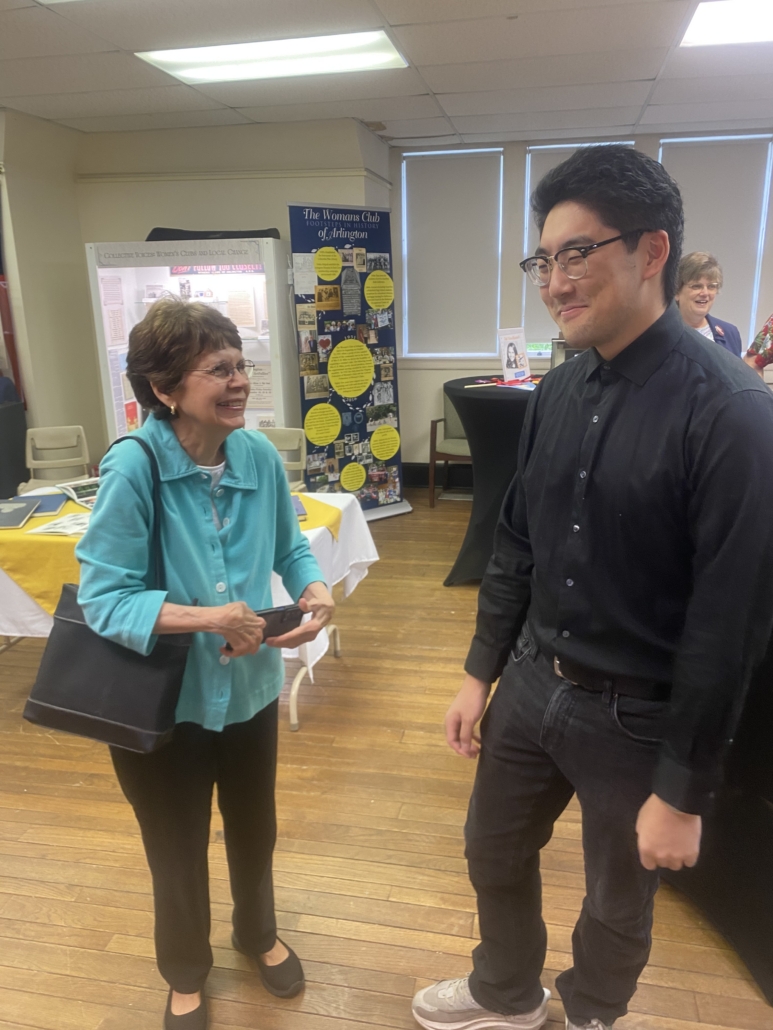
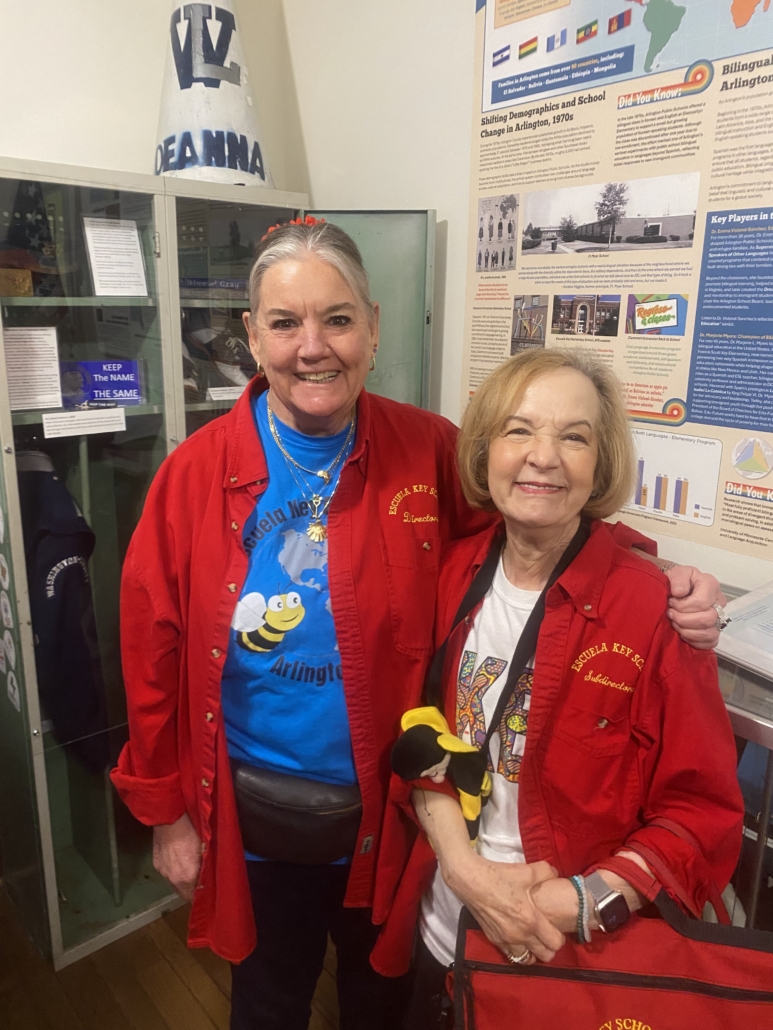
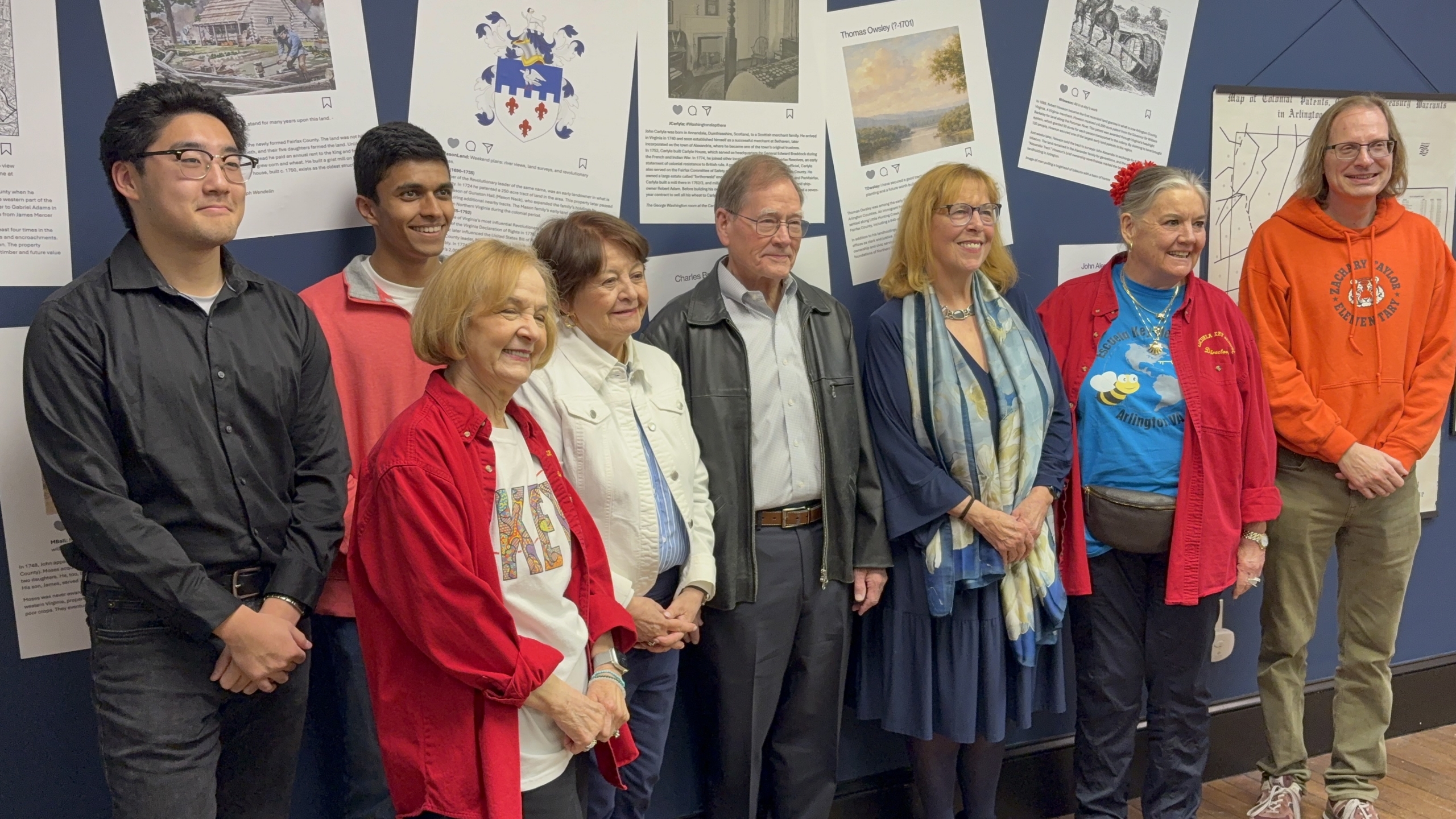
From left to right: Chris Park (Eagle Scout) conducted the interviews and made the education timeline handout Sheel Shah – Arlington Tech grad 2025 (interviewed) Evelyn Fernandez (Former Vice Principal, Escuela Key) Dr. Emma Violand-Sanchez (interviewed) Dr. Robert Smith (former APS Superintendent) interviewed Cathy Hix – interviewed Dr. Marjorie Myers ( Former Escuela Key Principal-featured on exhibit panel)
Building Minds, Shaping Futures” is a new permanent exhibit focused on public education located on the 2nd floor of the Arlington Historical Museum. The exhibit allows visitors to step into Arlington’s classrooms, past and present, and explore the history of public education in the county. From one-room schoolhouses to today’s innovative learning environments, museum-goers will discover how generations of students, teachers, and communities have shaped and been shaped by education in Arlington.
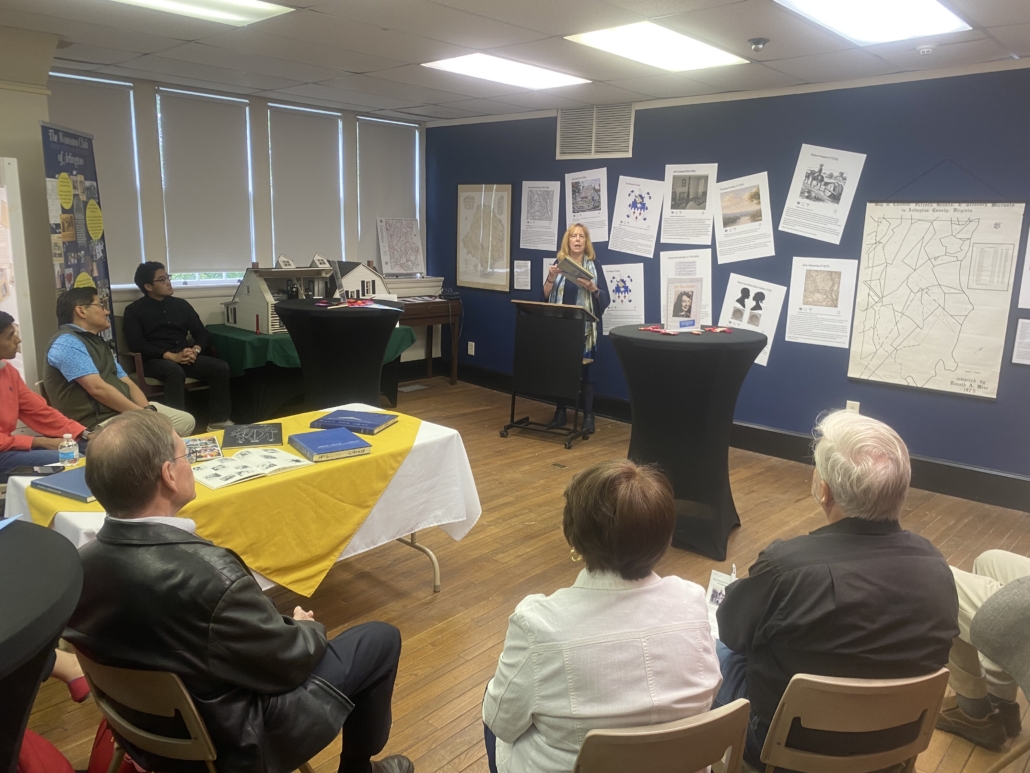
At the exhibit’s opening reception, Arlington educators and former students came to see the new displays and share their memories.
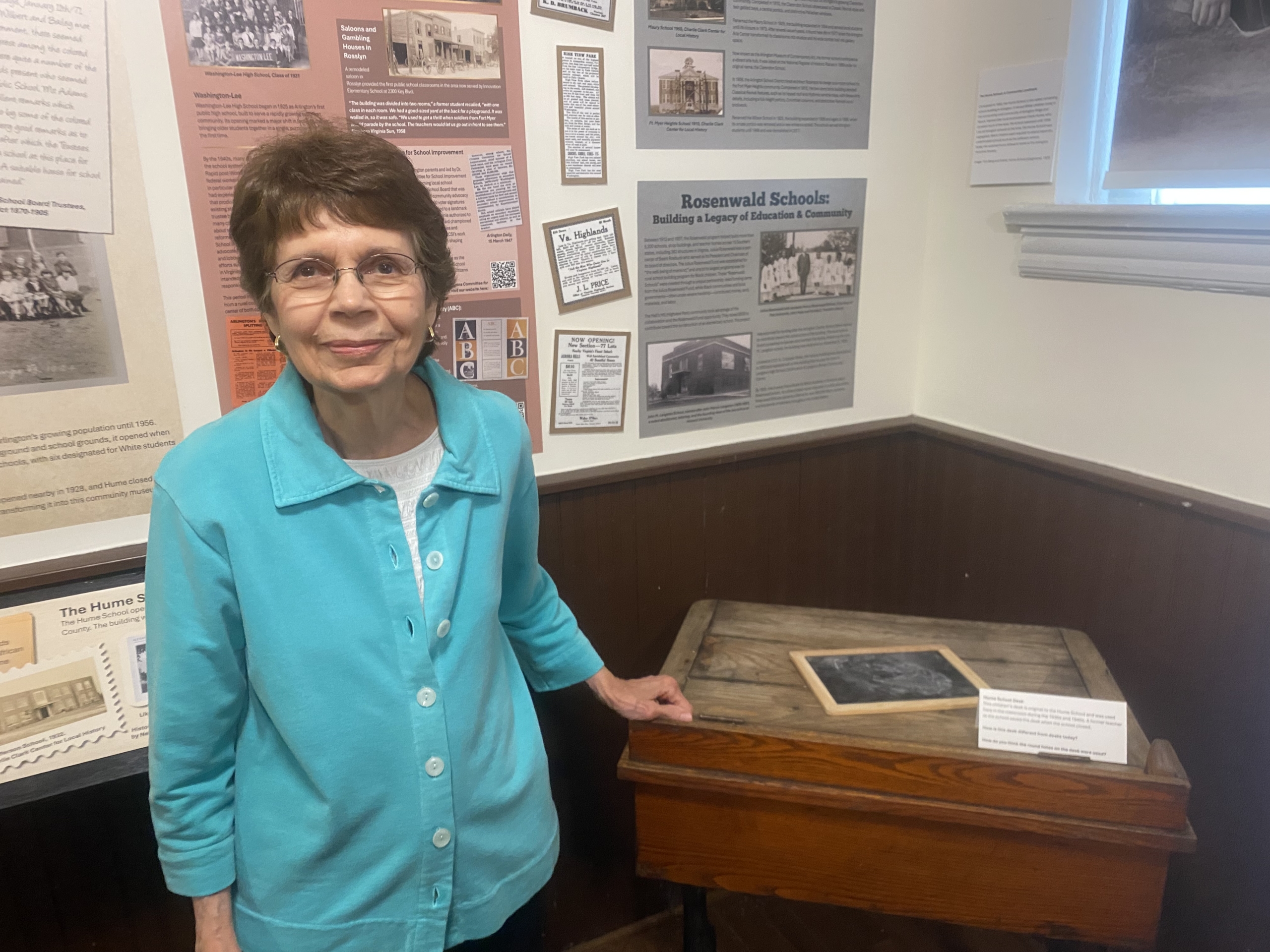
Joanne Haines
The exhibit space is dedicated to Gerry Haines, and his widow, Joanne, also spoke at the opening.
Former Arlington School administrator Kathy Hix gave some remarks on her experiences as both a student and teacher.
Education in Arlington County – My Experiences
Cathy Bonneville Hix
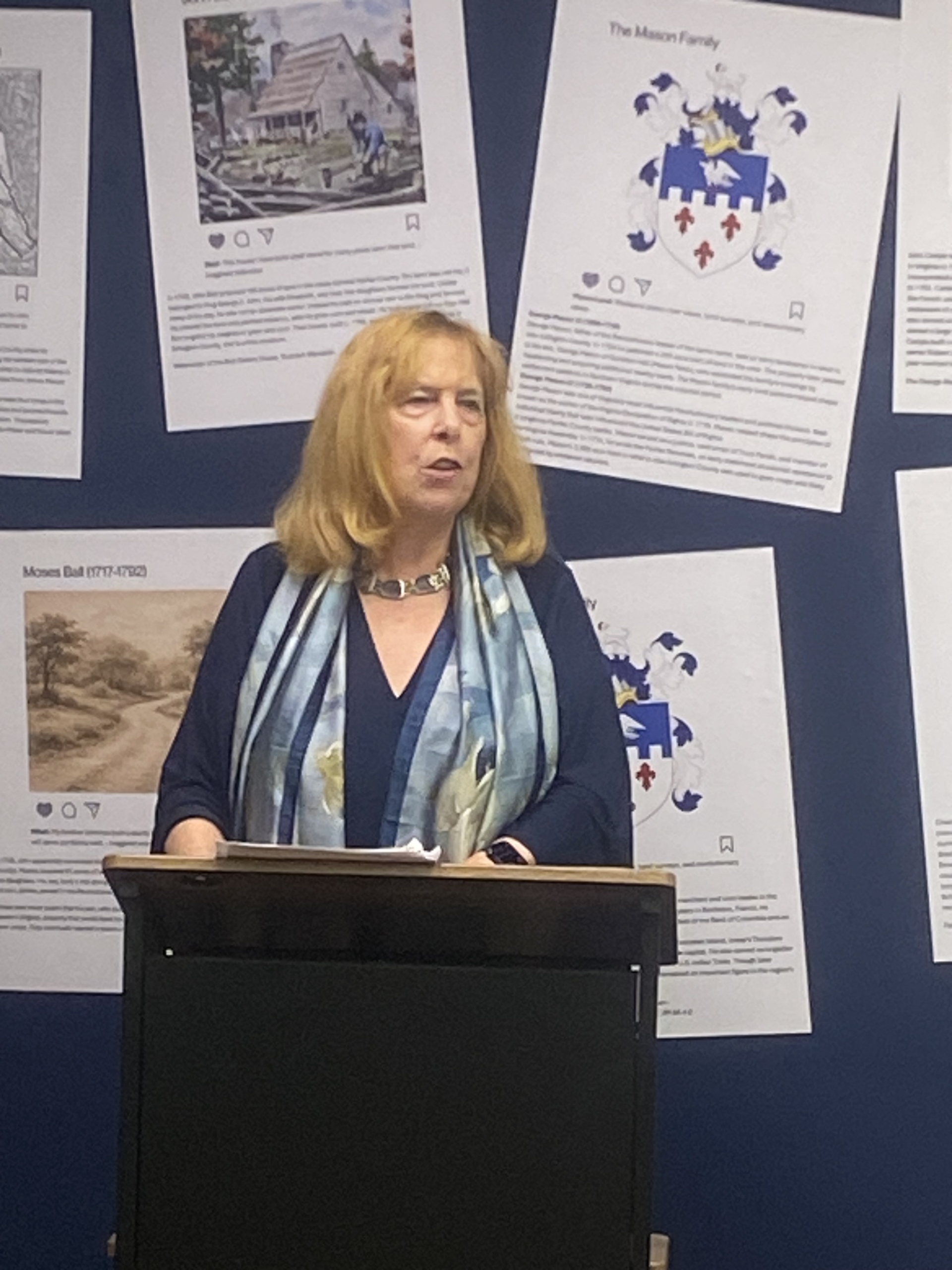 I was part of Arlington County Schools for most of my life, first as a student and later as an educator, witnessing many changes from the 1960s to 2018.
I began at Jackson Elementary in the early 1960s during the Cold War. Duck-and-cover drills and awareness of bomb shelters created a sense of fear. I recall a classmate saying the world would end “tomorrow,” and my teacher calming the class.
After moving, I attended Ashlawn, where education was traditional—Dick and Jane readers and no “new math.” By later elementary years, instruction became more innovative. I participated in independent study and even learned math via television, reflecting the era’s focus on science and the space race. Ashlawn also added programs for students with special needs, and serving as a student buddy inspired my future career. At the time, however, there was little diversity, despite Arlington’s earlier desegregation efforts.
At Swanson Junior High in 1970, I encountered more diversity and a wider range of activities. While some teachers were traditional, others introduced new ideas, such as teaching popular music. The Vietnam War and cultural shifts influenced student life, from fashion to attitudes.
I entered Washington-Lee High School in 10th grade, where academic and extracurricular opportunities were strong. Schools were becoming more relaxed—students could leave campus for lunch, and school culture was evolving. I graduated early in 1975.
That same year, federal legislation supporting special education created demand for teachers. With a dual major in education and special education, I secured a job in Arlington before graduating college. Returning to Swanson, I saw expanded programs and innovations, including the arrival of computers in 1986.
My early teaching years coincided with an influx of Vietnamese refugees and increasing diversity. Arlington responded with programs to support English learners, shaping a more globally focused school system. Later, the middle school model was adopted, and services expanded for diverse learners.
In the 1990s, Virginia introduced Standards of Learning (SOLs), raising concerns about “teaching to the test.” Arlington emphasized deep understanding instead.
The early 2000s brought challenges, especially the events of September 11. Schools responded with heightened security and emotional support for students. Despite difficulties, our community came together in meaningful ways.
After 31 years in the classroom, I moved to Central Office, where technology rapidly expanded. Devices, virtual learning, and digital resources became central, especially during COVID. We also shifted toward performance-based assessments emphasizing critical thinking and collaboration. I helped promote local history as an essential part of education.
Arlington continued to grow as a progressive system, offering diverse programs for students of all needs and backgrounds, including career training and college-level opportunities. The introduction of the IB Program further strengthened its global focus.
An excellent school system ensures high-quality, equitable education while fostering academic success and well-being. Arlington exemplifies this, and I am honored to have both learned and worked within such a system.
The Arlington Historical Museum is in the oldest existing schoolhouse in the county, the Hume School. It is open Saturdays 10-4 PM and Sundays 1-4 PM. It’s FREE!

