
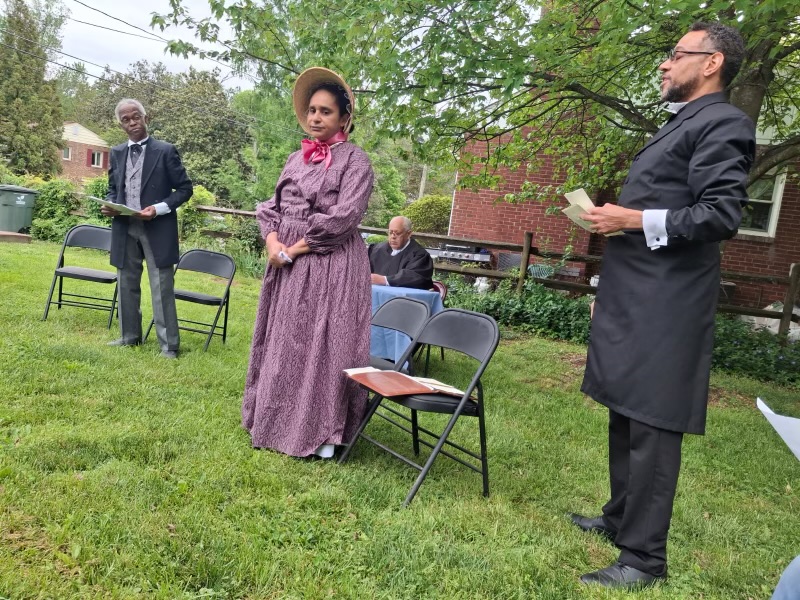
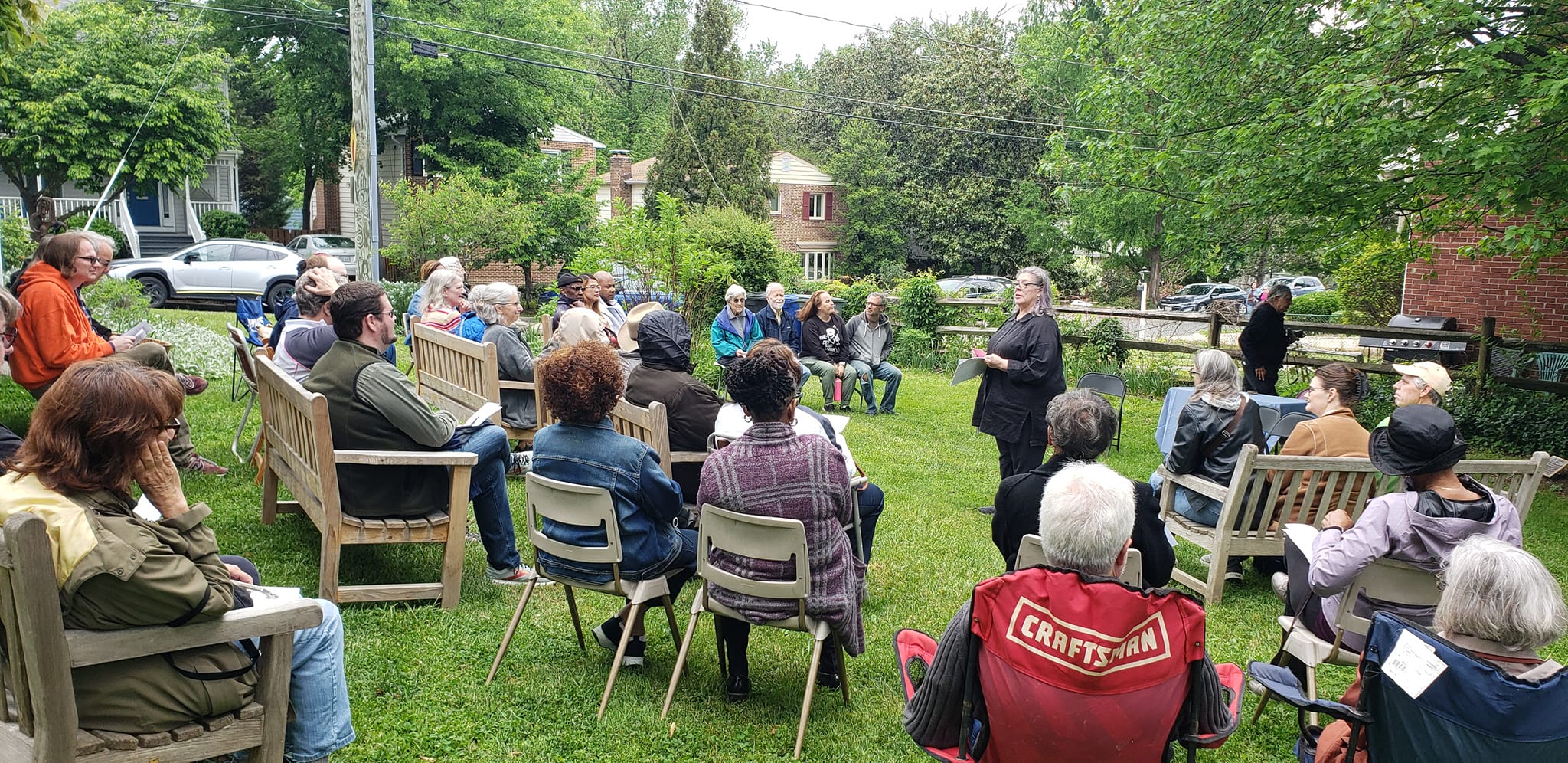
The play was performed at the Ball-Sellers House.
An original scripted reenactment brings history alive!
Julia Sues for Freedom is an original play depicting a 1842 trial – Julia Roberts v. Austin Adams and Anne Harding – in which Julia Roberts, an enslaved woman, sues to win her freedom.
This script is based on original documents, notes on the testimony from the 1842 trial, and research by Jessica Kaplan, Zachary Newkirk, and the Memorializing the Enslaved in Arlington team. Julia Sues for Freedom is a partnership between the Black Heritage Museum of Arlington and Guillotine Theatre, with the support of the Arlington Historical Society.
AHS Board member Jessica Kaplan and I spoke casually about a skit or play that might illustrate one of the stories discovered through Memorializing the Enslaved in Arlington research. When Jessica mentioned that one enslaved woman went to court to sue for her freedom, and that her case went all the way to the US Supreme Court, I asked her for more information. In March 2025, Jessica obliged with links to the court documents and two articles on Julia Roberts v. Austin Adams and Anne Harding. AHS Board member (and lawyer) Sean Denniston gave me further guidance on locating legal documents online.
Looking at the various documents was alternately fascinating and mind-numbingly dry. Julia’s original petition was quite dramatic, and several of the descriptions of what her mother endured were heart-wrenching. On the other hand, there were multiple pieces of testimony (summarized, not taken down verbatim) that merely repeated facts about the manumission of Julia’s mother. There were also notes describing what arguments the attorneys made, but no actual transcripts. I spent about two months writing dialogue based on the summarized testimony and turning the more interesting documents into speeches for the lawyers. Finally, I was confident that the script was accurate, entertaining, and clear, but I was unhappy with the result. Julia hadn’t spoken! Since Julia didn’t get to testify, I decided to have her character act as a narrator; she would stop the action to comment and elaborate on her story. Julia Roberts is a wonderful character — brave but angry, calm but with deep pain in her heart.
Before I could look for an actor to play this extraordinary role, I needed to find places to present Julia Sues for Freedom. I began contacting libraries, county parks, and art galleries in December. I envisioned this “scripted reenactment” as a pop-up event rather than as a formal theatrical production. Eventually, Arlington Central Library, the Ball-Sellers House, and Westover Farmers Market agreed to host performances. Now I could cast, but I hesitated. The real Julia was Black; both lawyers and the judge were White. There is real power in watching an enslaved Black woman take on an all-white judicial system and win, yet there is also something sad and almost cringeworthy in seeing a Black woman as a supplicant before a White judge, opposed by and championed by White lawyers. Dr. Scott Taylor of the Black Heritage Museum of Arlington suggested that we cast all the roles with Black actors, like Hamilton.
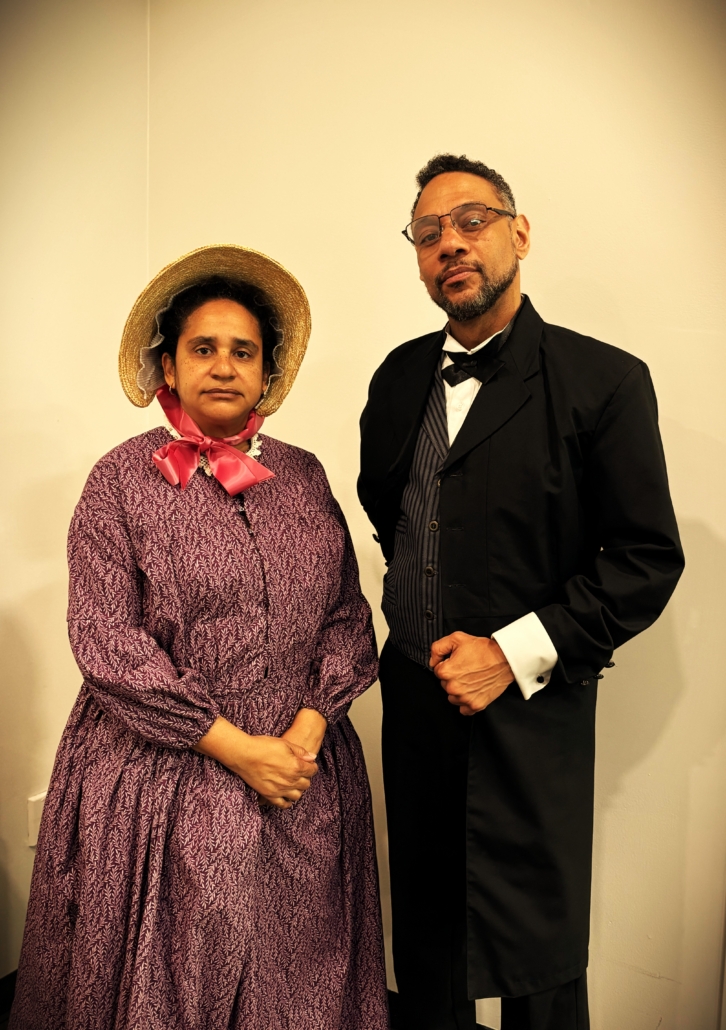
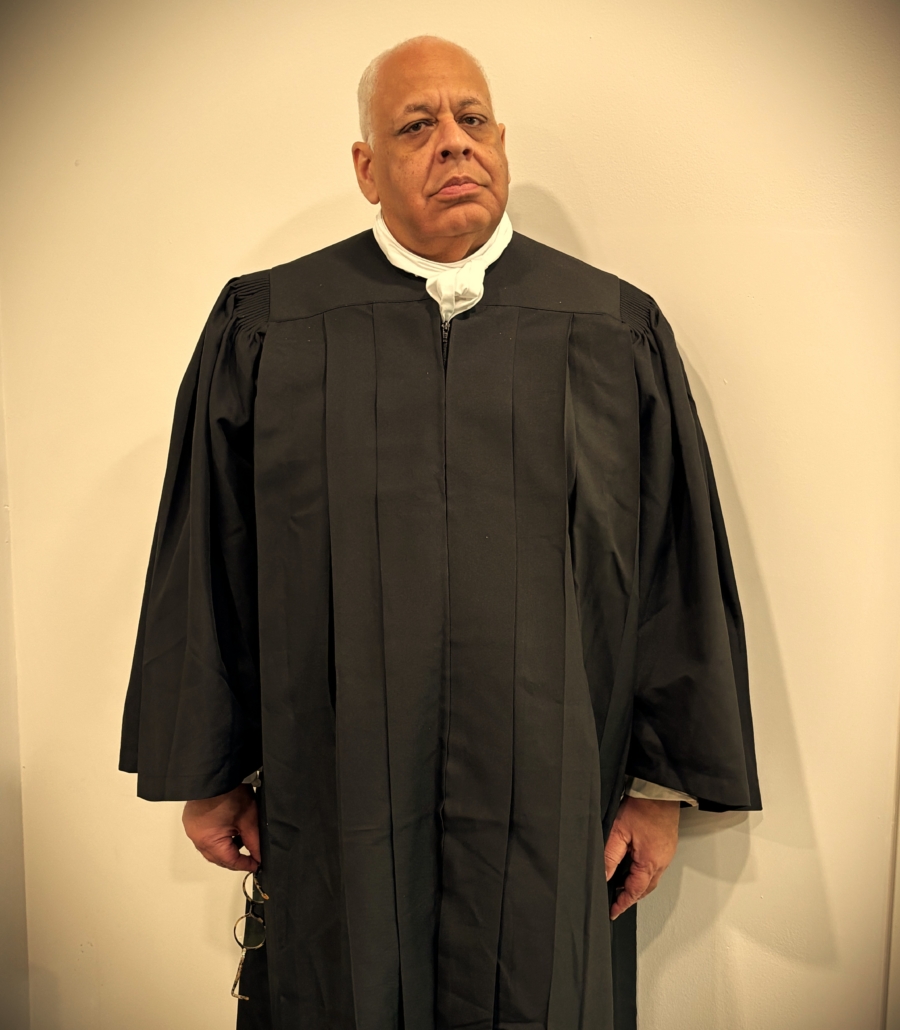
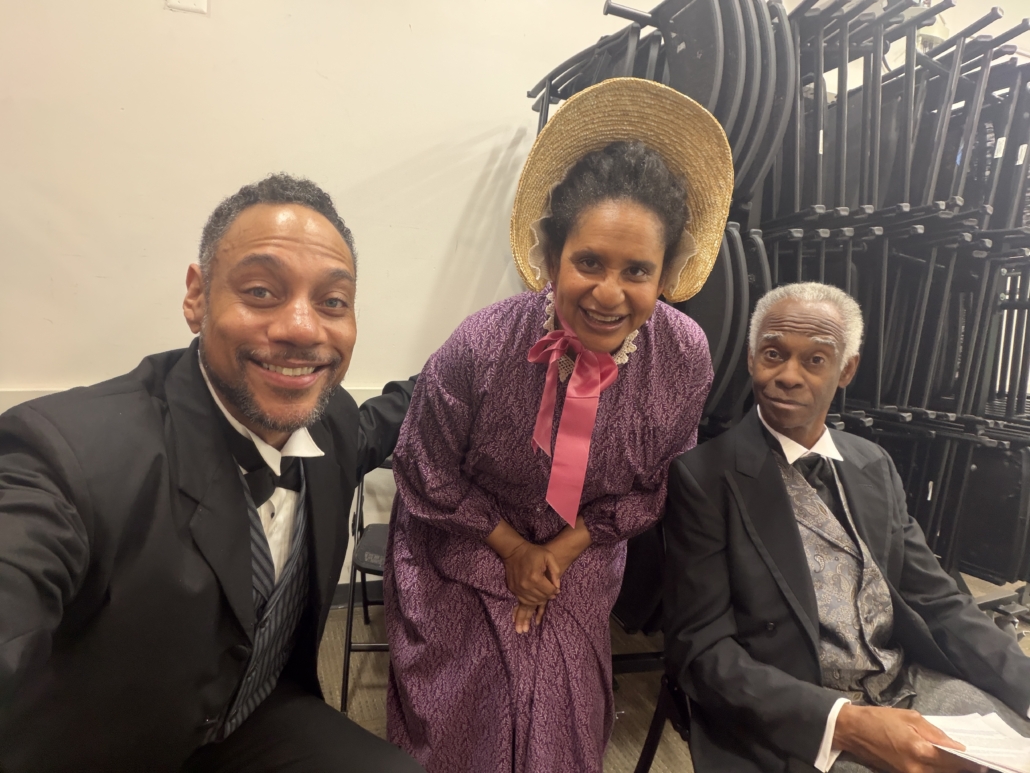
Our first presentation of Julia Sues for Freedom in the Central Library auditorium had an audience of 40. Almost everyone stayed for the discussion, and many asked questions about Julia’s life, about enslavement in Virginia, and about the case. Luckily, Bruce Eells, who played the judge for that performance, is also an attorney, so he was able to answer the legal questions. Other performances were held outdoors in April, including an event at the Ball-Sellers House. Sean Denniston plays Judge Cranch (who, like Sean, was from Massachusetts); Ken Jackson plays the lawyer for the enslavers; Ricardo Frederick Evans plays Julia’s lawyer; and Lisa Hill Corley plays Julia.
By Catherine Aselford

