
Ashton C. Jones, Sr.: The Developer Who Helped Build Modern Arlington
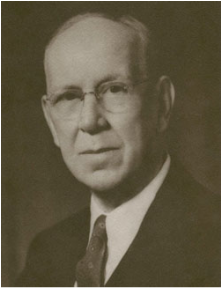 Few individuals had a greater influence on Arlington County’s physical development during the first half of the twentieth century than Ashton Crenshaw Jones, Sr. (1878/79–1960). As a real estate developer, civic leader, banker, and founding officer of the Arlington Historical Society, Jones helped transform Arlington from a rural county of farms and crossroads into a collection of thriving suburban neighborhoods while also recognizing the importance of preserving its past.
From Southern Virginia to Clarendon
Born in Lunenburg County, Virginia, Ashton C. Jones moved to Clarendon in 1909 after marrying Margaret Virginia Rucker, sister of real estate entrepreneur George H. Rucker. At Rucker’s invitation, Jones joined the newly established George H. Rucker & Company, one of the firms that would shape Arlington’s residential growth during the twentieth century.
Before entering the real estate business full time, Jones also served as deputy county court clerk under George Rucker while Rucker was Clerk of the County Court. These early years gave Jones a firsthand understanding of Arlington’s land records and the county’s rapidly changing landscape.
Following George Rucker’s death in 1919, Jones assumed a larger leadership role in the company. Over the following four decades he became one of Arlington’s most successful developers, overseeing the planning and sale of residential subdivisions that attracted thousands of new residents to the county.
Creating Ashton Heights
Jones is best remembered as the developer of Ashton Heights, the neighborhood that still bears his name.
In 1919 he purchased approximately 61 acres of the former Brookdale estate west of Clarendon. Two years later he recorded the subdivision known as Ashton Heights, laying out streets, residential lots, and building sites designed to appeal to Washington-area commuters seeking suburban homes with convenient access to the city.
The neighborhood expanded steadily throughout the 1920s and 1930s as additional sections were added by Jones and other developers. Today Ashton Heights is recognized as one of Arlington’s best-preserved early suburban communities and was listed on the National Register of Historic Places in 2003 for its significance in community planning and architecture.
Jones also developed Lee Heights and played an important role in the growth of other Arlington neighborhoods through the activities of George H. Rucker & Company. The firm participated in the development or marketing of areas including Cherrydale, Ballston, Tara-Leeway, and Westover, helping establish the residential pattern that still defines much of central Arlington today.
Building More Than Neighborhoods
Jones believed that successful communities required more than houses.
Throughout his career he became deeply involved in Arlington’s civic and financial institutions. He served as president of the Arlington Chamber of Commerce, organized and chaired the First Federal Savings and Loan Association, chaired the Clarendon Trust, and was active in numerous religious, civic, and fraternal organizations. A longtime Baptist deacon, he was widely respected for combining business leadership with community service.
These organizations provided much of the financial infrastructure that supported Arlington’s rapid growth during the decades before and after World War II.
A Founder of the Arlington Historical Society
Although remembered primarily as a developer, Jones also appreciated the importance of preserving Arlington’s history.
By the 1950s, the county was changing at an unprecedented pace. Farms were disappearing, historic buildings were being demolished, and longtime residents recognized that Arlington’s early history could easily be lost amid suburban expansion.
Jones joined Senator Frank L. Ball, Sr., C. Harrison Mann, Jr., Robert Nelson Anderson, Jr., Cornelia B. Rose, Jr., and other civic leaders in establishing the Arlington Historical Society. At the Society’s organizational meeting on September 14, 1956, held at the home of Laszlo Ecker-Racz and Cornelia B. Rose, Jr., Jones was elected one of its first officers.
His participation reflected an interesting balance in Arlington’s history. Few people had done more to shape the county’s modern landscape, yet Jones also recognized that progress should not come at the expense of remembering the communities and people who came before.
Lasting Legacy
Ashton C. Jones died in 1960 after more than fifty years of service to Arlington.
His greatest legacy remains visible across the county. The tree-lined streets of Ashton Heights, the homes of Lee Heights, and numerous other neighborhoods owe much of their existence to his vision of carefully planned suburban development. At the same time, his role as a founding officer of the Arlington Historical Society demonstrates his commitment to ensuring that Arlington’s remarkable transformation would be documented and remembered.
Today, residents may know Ashton Heights simply as one of Arlington’s most desirable historic neighborhoods, but its name also commemorates one of the individuals who helped define twentieth-century Arlington. Jones was more than a developer; he was a civic builder whose influence extended from neighborhoods and businesses to the institutions that continue to preserve Arlington’s history.
Sources
- Arlington Historical Society. Fifty Years of the Arlington Historical Society, by Ruth Preston Rose. https://arlhist.org/wp-content/uploads/2019/10/2006-5-Society.pdf
- Virginia Department of Historic Resources. Ashton Heights Historic District National Register Nomination (2003). https://www.dhr.virginia.gov/VLR_to_transfer/PDFNoms/000-7819_Ashton_Heights_Historic_District_2003_Final_Nomination.pdf
- Virginia Department of Historic Resources. Ashton Heights Historic District. https://www.dhr.virginia.gov/historic-registers/000-7819/
- Arlington Public Library, Virginia Room. “The Rucker Legacy.” https://library.arlingtonva.us/2006/12/05/the-rucker-legacy/
- Ashton Heights Civic Association. “History of Ashton Heights.” https://ashtonheights.org/about-ashton-heights/history/
Click here to add your own text

